
Book Design Tips
Published by the PrintoutRajan.shop printing team, New Delhi · Updated 2026
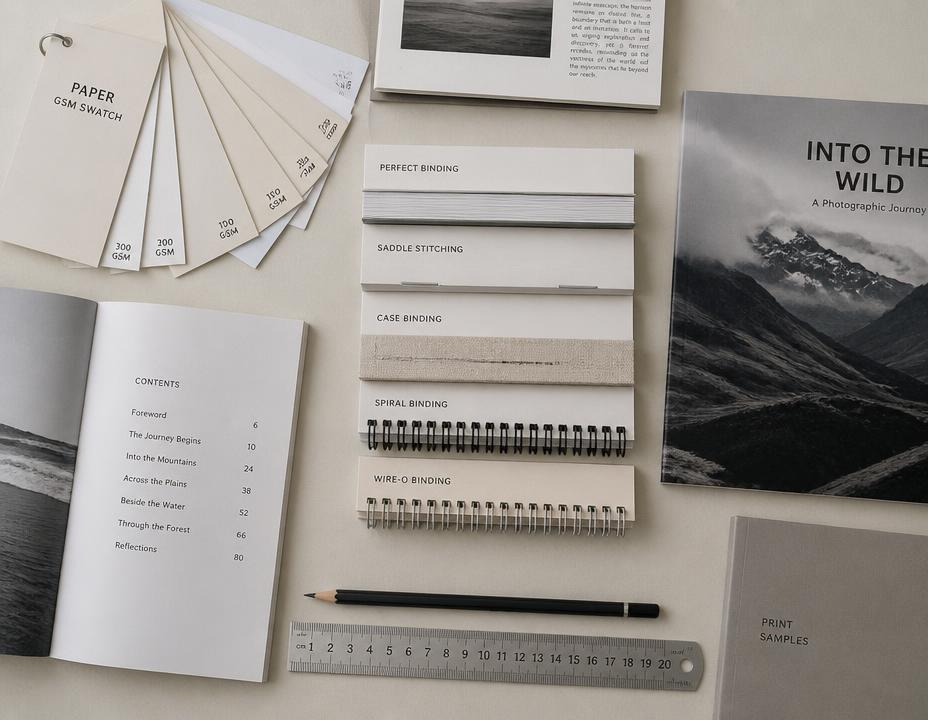
Book Design Tips is a question we answer several times a week at PrintoutRajan.shop, our New Delhi bookstore and printing house. This guide gathers what we have learned from printing and supplying books for students, schools, coaching institutes, authors and companies, and puts it into a form you can act on immediately. It is written for readers in India, with Indian pricing, paper availability and courier realities in mind.
There is a lot of vague advice on this subject online, much of it written by people who have never stood next to a press or opened a carton of finished books. What follows is practical. Where a number matters, we give the number. Where a trade-off exists, we describe both sides so you can decide for your own situation rather than following a generic recommendation.
Why This Matters
Books cost money, time and attention. A poor decision at the buying or printing stage compounds: the wrong edition wastes a study season, the wrong paper makes a book unpleasant to use, the wrong binding turns a proud first edition into loose pages within a year, and the wrong quantity locks capital into stock that sits unsold.
Getting it right is not complicated, but it does require thinking through a handful of questions in the correct order. The rest of this article walks through those questions and gives you a defensible answer to each one.
Throughout, we link to related guides and to the pages where you can act on the advice — whether that means browsing a category, requesting a printing quote, or simply calling us on 7289879398 to talk it through with a person.
The Fundamentals
Start with purpose. A book bought to be read once cover to cover has different requirements from one that will be annotated daily for two years, and both differ from a book printed to be sold or gifted. Purpose determines paper, binding, print method and budget in that order.
Next, consider usage intensity. Daily-use books need durable binding and paper that takes pen ink without bleeding through. Occasional-reference books can use lighter specifications. Display or gift copies justify hardcover casing, foil and heavier paper because the object itself carries meaning.
Then, consider quantity. Quantity is the single largest driver of unit cost in printing. Digital printing has no plate cost and is therefore economical for short runs. Offset printing carries a fixed setup cost that becomes negligible when spread across hundreds of copies, so unit price falls steeply as quantity rises. Around 300 copies is the usual crossover point in the Indian market, though page count shifts it.
Finally, consider time. Everything can be done faster, but faster usually costs more and leaves less room for correction. Building a buffer of a few working days into your plan is the cheapest insurance available.
A Practical Framework
- Define the outcome. Write one sentence describing what a successful result looks like: 'three hundred paperback copies in hand by the fifteenth, under a set budget, good enough to sell at events.'
- List the hard constraints. Budget ceiling, deadline, mandatory specifications (a university may dictate thesis binding, a school may dictate trim size).
- Choose the specification that satisfies the constraints. Paper, binding, colour and finish. Ask for advice at this stage; it is free and it is where the most money is saved.
- Prepare or verify the file. Print-ready PDF, embedded fonts, 300 DPI images, correct margins for the binding, pages in reading order.
- Approve a proof. Never skip this on a run above fifty copies. A proof costs a little and saves a lot.
- Confirm logistics. Delivery address, carton count, receiving contact, and who signs for the consignment.
- Inspect on arrival. Check page order, trim, spine alignment and count on a sample of copies immediately, while any claim is still straightforward.
Common Mistakes And How To Avoid Them
Tight gutter margins. The most frequent problem we see in author-supplied files. Text disappears into the spine on perfect-bound books. Allow 18 to 22 mm inside margin on books over 200 pages.
Low-resolution images. An image that looks sharp on a screen at 72 DPI prints as a soft, pixelated block. Source images at 300 DPI at final printed size, not at thumbnail size scaled up.
Rich black text. Body text built from four inks registers imperfectly and looks muddy. Set text to 100 per cent K only.
Ordering the wrong quantity. Over-ordering ties up cash in unsold stock; under-ordering means a second short run at a higher unit price. Estimate honestly, then check whether the next price break is close enough to justify a slightly larger run.
Skipping the physical proof. Screens lie about colour, weight and feel. A printed proof takes a day and eliminates the worst surprises.
Leaving no time buffer. Couriers face weather, festivals and strikes. Plan to receive stock several days before you actually need it.
Talk To A Printer, Not A Chatbot
Call 7289879398 or email [email protected] with your question. We give honest, specific answers, including when the cheaper option is the better one.
Costs In The Indian Market
As a working reference: a 200-page A5 black-and-white paperback typically costs between Rs 110 and Rs 340 per copy depending entirely on quantity. Hardcover casing adds roughly Rs 120 to Rs 250 per copy. Full-colour interiors can multiply the interior cost several times over, which is why illustrated books usually restrict colour to specific signatures rather than the whole block.
Finishing choices are smaller line items but they add up: lamination is inexpensive and always worth it, spot UV and foil are noticeable premium touches, and a printed dust jacket on a hardcover adds meaningful cost. Decide which of these your reader will actually value.
Delivery is the cost most people forget. Cartons of books are heavy. Budget for freight, and where possible consolidate deliveries to one address rather than dispatching in small batches to many.
How PrintoutRajan.shop Helps
We are a bookstore and a printing house in the same building, which means the advice you get is grounded in what the press can actually deliver. Our team reviews your file before quoting, flags problems early, produces a proof you can hold, and prints on equipment we maintain ourselves.
You can browse and buy ready titles in our book categories, explore subject-wise book categories, or send a manuscript through our book printing services. Everything ships from T-552 Baljeet Nagar, Patel Nagar, New Delhi, Delhi 110008, India, with tracked delivery across India.
If you are unsure where to start, call 7289879398. Describe your situation in plain language and we will tell you what we would do in your place.
Explore More
Frequently Asked Questions
How quickly can I get printed books in hand?
Is digital printing lower quality than offset?
What is the cheapest way to print a book without it looking cheap?
Do I need an ISBN?
Can you print in Hindi and other Indian languages?
Do you ship outside Delhi?
Ready To Order Or Print?
Browse printed books at direct-from-press prices, or send your manuscript for a same-day printing quote.